
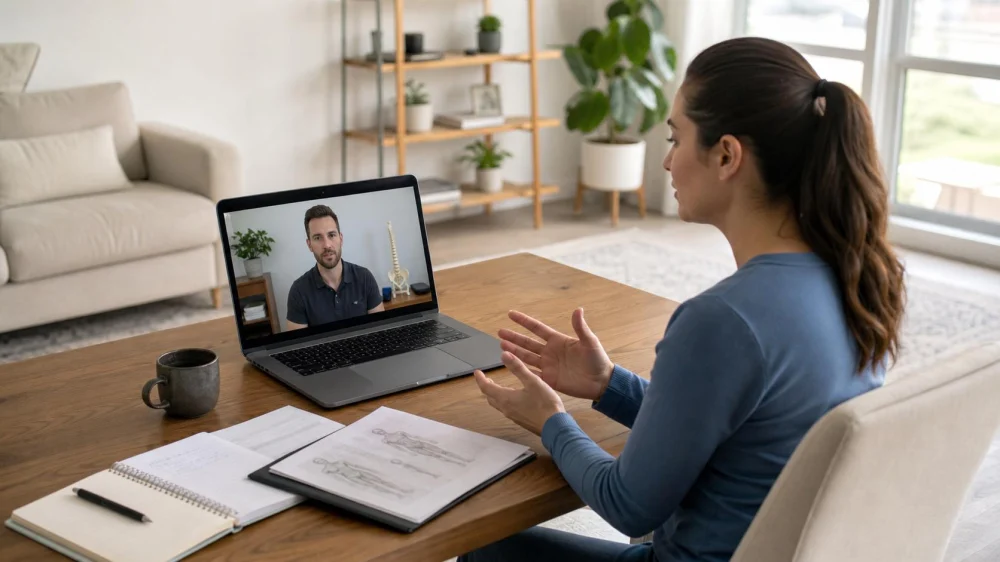
Chiropractic Telehealth: Know What a Remote Visit Can Do
On this page
Quick answer
A chiropractic telehealth visit may support history-taking, record review, symptom and function tracking, education, ergonomic discussion, visible movement observation, and follow-up planning when lawful and appropriate. It cannot provide hands-on examination, palpation, strength or reflex testing, imaging, or manual treatment. The clinician should confirm your physical location, identity, emergency plan, privacy, fees, and whether an in-person or medical evaluation is needed.
This guide is for U.S. patients considering a remote chiropractic appointment. Telehealth laws, licensure, payer rules, technology, and clinical scope vary by state and change over time. Verify current details with the clinic and official sources.
What remote visits may support
- Discussing when symptoms began, what changes them, and how they affect daily function
- Reviewing prior records, imaging reports, medications, and medical diagnoses
- Clarifying home exercise instructions already judged appropriate
- Observing simple movement within a safe visible range
- Reviewing desk, sleep, lifting, or activity setup without claiming one posture is perfect
- Tracking goals such as walking, work tolerance, sleep, or return to activity
- Coordinating referral or an in-person appointment
A remote visit is best when the clinical question can be answered through conversation, records, observation, and shared planning. Convenience should not override the need for hands-on or urgent assessment.
What telehealth cannot do
Video cannot reproduce palpation, joint testing, reflexes, sensation testing, manual muscle testing, vital signs, or the full neurologic and orthopedic examination. Camera angle, clothing, lighting, connection quality, and patient self-report limit observation.
Manual adjustment, mobilization, massage, taping, and other physical treatments cannot occur through a screen. A clinician should not ask an untrained family member to perform manipulation or risky testing. Remote advice cannot rule out fracture, infection, vascular problems, nerve compression, or other serious causes by appearance alone.
Prepare for the appointment
- Confirm the clinician is licensed to provide the service where you will physically be located.
- Ask whether the visit is consultation, evaluation, follow-up, or exercise review.
- Verify price, insurance handling, cancellation, recording, and portal terms.
- Send requested records through the approved secure method.
- List symptoms, medicines, diagnoses, recent injuries, goals, and questions.
- Use a stable device, reliable connection, and private well-lit room.
- Keep your exact address and emergency contact available.
- Wear clothing that allows movement without compromising privacy.
Do not join while driving, at work around hazards, or in a public place where health information can be overheard.
Keep remote movement assessment safer
Clear the floor, move pets and children away, use stable footwear or bare feet only when instructed and safe, and keep a sturdy support nearby. Position the camera before moving. Do not carry the device during a balance task.
The clinician should explain what movement to attempt, what not to do, and what symptom means stop. Never force range, repeat a movement that causes increasing pain, or attempt a high-load test, fall-risk task, self-manipulation, or partner-assisted maneuver on video.
Privacy, location, cost, and records
Ask which platform is used, whether the session is recorded, who may be present, how records are stored, and what happens if the connection fails. The clinician should obtain consent appropriate to telehealth and document the visit.
Insurance coverage does not automatically mean a service is appropriate or fully paid. Confirm the billing code, patient responsibility, and whether an in-person visit will be an additional charge. Ask how to obtain the note and plan afterward.
When remote care is not enough
Seek urgent medical assessment rather than waiting for routine telehealth when pain follows major trauma, or occurs with new weakness, loss of coordination, bowel or bladder changes, numbness around the groin, fever, unexplained weight loss, fainting, chest pain, severe headache, trouble speaking, facial droop, vision change, or other concerning symptoms. Call 911 for a possible emergency.
The clinician should end or redirect the remote visit when the necessary examination cannot be performed, symptoms worsen during movement, technology prevents safe communication, or your location cannot be confirmed for emergency response.
Frequently asked questions
Can a chiropractor diagnose me over video?
Some clinical assessment may be possible within licensure and telehealth rules, but remote limitations can prevent a reliable diagnosis. Ask what conclusion is supported and what in-person examination is still needed.
Can I receive an adjustment by following instructions myself?
No hands-on adjustment occurs remotely. Do not perform forceful self-manipulation or ask another person to do it. Remote care may focus on education, safe movement, and planning.
Does the chiropractor need a license in my state?
Usually the patient's physical location affects licensure authority. Rules differ and change, so verify through the relevant state board and clinic before the visit.
Will insurance pay?
Coverage depends on plan, provider, location, code, and current policy. Obtain a benefit estimate and ask about self-pay charges; payment does not guarantee reimbursement.
Can the visit be recorded?
Only under applicable consent, privacy, and clinic policy. Ask before recording, and do not assume either party may record without permission.
Sources and evidence notes
This article reflects general telehealth practice: confirm patient location, consent, privacy, technology, emergency plan, and limitations of remote examination. Current state licensure and professional scope rules determine whether a specific service can be delivered.
Next steps
Ask the clinic what clinical question the remote visit is meant to answer and what would trigger in-person or medical assessment. Confirm licensure, location, cost, privacy, records, and emergency procedures. Prepare a safe movement space and written symptom timeline, then expect a clear plan that acknowledges what video cannot establish.






 Spinewise Chiropractic5.0 (43 reviews)
 Trimble Chiropractic0.0 (0 reviews)
 Back To Health Chiropractic Center - Dr. Colleen Kachele5.0 (41 reviews)
 Hand in Hand Chiropractic5.0 (76 reviews)
 Peak Injury Solutions4.0 (53 reviews)
 Pashayan Richard DC4.0 (36 reviews)
 Chiropractic Telehealth: Know What a Remote Visit Can Do
 Chiropractic Solutions for Managing Chronic Fatigue Syndrome | ChiroScope
 Questions to Ask About Chiropractic Clinic Accessibility
 Understanding the Connection Between TMJ, Chiropractic, and Your Spine
 Best Chiropractic Treatments for Lower Back Pain: Tips from Experts
 How Chiropractic Adjustments Help Relieve Symptoms of Sciatica