
- #understanding-hip-bursitis - Understanding Hip Bursitis and Its Real Causes
- #chiropractic-approach - How Chiropractic Care Targets Hip Bursitis
- #extremity-adjustments - Extremity Adjustments That Actually Improve Mobility
- #pain-mechanisms - Why Hip Pain Often Comes from More Than the Hip
- #real-cases - Real Patient Stories and Recovery Experiences
- #treatment-strategy - Effective Chiropractic Treatment Strategies
- #rehab-and-movement - Rehab Exercises and Movement Restoration
- #chiroscope-insights - Professional Guidance and ChiroScope Resources
Understanding Hip Bursitis and Its Real Causes
Hip bursitis is one of those conditions that sounds simple on paper but often becomes frustratingly complex in real life. The phrase Chiropractic for hip bursitis: extremity adjustments that actually work reflects a growing interest in non-surgical, movement-based solutions that go beyond temporary pain relief.
At its core, hip bursitis involves inflammation of the bursae—small fluid-filled sacs that cushion the hip joint. When these sacs become irritated, even simple movements like walking, climbing stairs, or sleeping on one side can become painful. However, many patients are surprised to learn that the hip itself is not always the root cause.
Why hip pain is often misleading
A key insight in modern musculoskeletal care is that hip pain frequently originates from imbalances elsewhere in the body. The pelvis, knees, and even ankles can influence how the hip moves and absorbs stress. This interconnected system explains why localized treatment alone sometimes fails to deliver lasting relief.
How Chiropractic Care Targets Hip Bursitis
Chiropractic care takes a structural and functional approach to hip bursitis rather than focusing solely on inflammation. The goal is to restore proper alignment and movement patterns so the body can heal more efficiently.
Whole-body biomechanical assessment
A chiropractor begins by evaluating how the entire lower body moves. This includes gait analysis, pelvic alignment checks, and joint mobility testing. Even subtle imbalances in the spine or lower extremities can contribute to chronic hip stress.
Reducing mechanical stress on the hip joint
By improving alignment in surrounding joints, chiropractic adjustments reduce uneven pressure on the hip bursa. This allows inflammation to settle naturally instead of being repeatedly aggravated by poor mechanics.
Restoring natural movement patterns
Patients often unknowingly adapt to pain by shifting their posture or walking differently. Chiropractic care helps retrain these patterns so movement becomes balanced again, preventing recurrence of symptoms.
Extremity Adjustments That Actually Improve Mobility
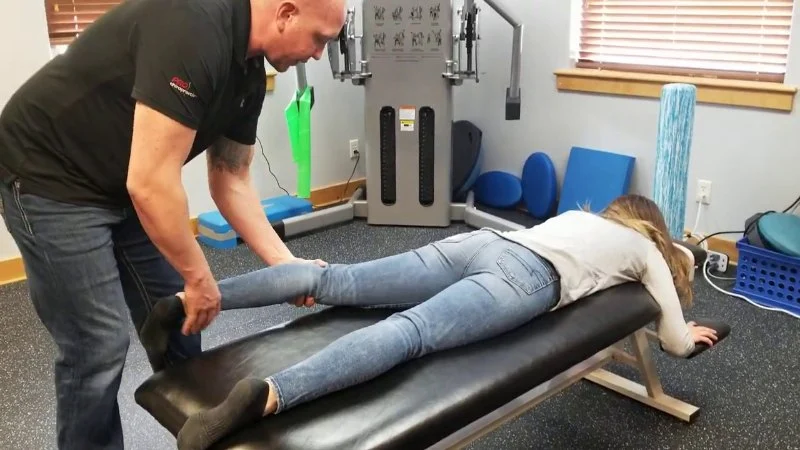
One of the most effective yet underappreciated aspects of Chiropractic for hip bursitis: extremity adjustments that actually work is the use of extremity adjustments—precise manipulations of joints beyond the spine.
Knee and ankle alignment correction
When the knees or ankles are misaligned, the hip compensates with extra strain. Adjusting these joints can significantly reduce hip load and improve overall movement efficiency.
Pelvic and sacroiliac joint adjustments
The pelvis acts as the foundation for hip movement. Even slight imbalances in the sacroiliac joint can contribute to chronic bursitis symptoms. Correcting these imbalances often leads to noticeable pain reduction.
Functional movement integration
Chiropractors often combine adjustments with movement re-education. This ensures that corrected alignment is maintained during daily activities like walking or bending.
Why Hip Pain Often Comes from More Than the Hip
One of the most important breakthroughs in musculoskeletal medicine is understanding referred pain and kinetic chain dysfunction. Hip bursitis symptoms may actually be influenced by multiple contributing factors.
Muscle imbalance patterns
Weak gluteal muscles and tight hip flexors can increase pressure on the bursae. Over time, this imbalance leads to inflammation and restricted mobility.
Postural stress accumulation
Long hours of sitting—especially common in office jobs—can shorten hip flexors and alter pelvic tilt. This creates a chronic stress environment for the hip joint.
Compensation injuries
In many cases, an old ankle or knee injury leads to altered gait mechanics. The hip then absorbs forces it was never designed to handle repeatedly.
Real Patient Stories and Recovery Experiences
A patient in Arizona, a 52-year-old teacher, struggled with persistent hip pain for over a year. Initially diagnosed with bursitis, she tried rest, medication, and physical therapy with limited improvement. After undergoing chiropractic extremity adjustments, her practitioner discovered significant ankle misalignment affecting her gait.
Within several weeks of combined ankle and pelvic adjustments, her hip pain decreased dramatically. She later described the experience as “finally feeling like my body was working as a system again instead of fighting itself.”
Another case involved a recreational runner in Colorado who developed hip bursitis after increasing training intensity. The issue was traced back to restricted knee mobility, which forced excessive hip compensation during running. Corrective adjustments allowed him to return to training without recurring pain.
Effective Chiropractic Treatment Strategies
A structured chiropractic approach to hip bursitis typically involves multiple phases of care rather than a single intervention.
Initial pain reduction phase
The first stage focuses on reducing inflammation and relieving mechanical stress through gentle adjustments and soft tissue work.
Structural correction phase
Once pain decreases, deeper adjustments target the spine, pelvis, and extremities to correct underlying alignment issues.
Stabilization phase
Strengthening and mobility exercises are introduced to maintain improvements and prevent relapse of symptoms.
Rehab Exercises and Movement Restoration
Chiropractic care for hip bursitis is most effective when combined with guided rehabilitation. Movement retraining ensures long-term success.
Glute activation exercises
Strengthening the gluteal muscles reduces stress on the hip joint and improves stability during walking and standing.
Hip mobility drills
Controlled mobility exercises help restore natural range of motion without aggravating inflammation.
Postural correction training
Improving sitting and standing posture reduces unnecessary strain on the hip and supports long-term joint health.
Professional Guidance and ChiroScope Resources
Understanding Chiropractic for hip bursitis: extremity adjustments that actually work requires access to reliable clinical insights and structured care guidance. Platforms like ChiroScope help patients and practitioners explore evidence-informed approaches, treatment options, and rehabilitation strategies tailored to hip and joint dysfunction.
By combining extremity adjustments, movement correction, and individualized rehabilitation, chiropractic care offers a comprehensive pathway for managing hip bursitis without relying solely on medication or invasive procedures. This integrative approach continues to gain recognition among both patients and healthcare professionals seeking long-term functional recovery.



 QUIROPRACTICA VERONICA DE LA CRUZ0.0 (0 reviews)
 Freeman's Chiropractic and Family Wellness {Leola}5.0 (20 reviews)
 Myobalance Chiropractic & Acupuncture5.0 (78 reviews)
 Strategic Wellness5.0 (12 reviews)
 HealthSolutions of Carmel Chiropractic and Spinal Rehab: Adam Newton, D.C.4.0 (178 reviews)
 Team Chiropractic and Sports Medicine Center4.0 (475 reviews)
 Frozen Shoulder Relief Without Medication – Chiropractor Approved Techniques
 Chiropractic for Treating Herniated Discs and Spinal Injuries
 Chiropractic for Joint Pain Relief: Exploring Non-Surgical Treatment Options
 Chiropractic Adjustments for Improving Your Flexibility and Range of Motion
 Understanding the Connection Between Chiropractic vs Physical Therapy and Your Spine
 The Role of Chiropractic Care in Managing Temporomandibular Joint (TMJ) Disorders