

Joint Hypermobility: Plan Manual Care Around Stability
Quick answer: Flexible joints are not automatically unhealthy, but pain, repeated sprains, partial or full dislocations, or poor movement control deserve an individualized assessment. Before chiropractic or other manual care, explain which joints feel unstable and ask how the plan will protect them. The practical goal is usually controlled, comfortable function—not gaining more range of motion.
Joint hypermobility varies widely. Some people are flexible without symptoms; others have instability related to a hypermobility spectrum disorder (HSD), hypermobile Ehlers-Danlos syndrome (hEDS), another connective-tissue condition, or a separate injury. A short history and a stability-first plan can make a visit more useful and help identify when medical evaluation should come first.
1. Separate Flexibility From Symptomatic Instability
Hypermobility means a joint moves farther than expected. It can be painless and require no treatment. Instability is different: the joint is not held securely during movement, which may contribute to recurring sprains, subluxations, dislocations, pain, or loss of confidence in the joint. The distinction matters because a person with instability may need more control and support rather than more stretching.
A flexibility score alone does not diagnose HSD or hEDS. Diagnosis considers symptoms, history, examination, and whether another condition better explains the findings. If you have never been assessed, describe the pattern instead of self-diagnosing: which joints move excessively, what triggers symptoms, and whether the joint has ever partly or fully come out of place.
2. Know When to Seek an Assessment First
Talk with a primary-care clinician or an appropriately trained musculoskeletal professional before elective manual care when hypermobility is accompanied by persistent pain, repeated injuries, frequent subluxations or dislocations, major balance problems, or a strong family history of a connective-tissue disorder. Medical review is also sensible if you have unusual bruising, fragile skin, poor wound healing, unexplained fainting, or other symptoms outside the joints.
This is not a claim that every flexible person needs testing. It is a way to avoid treating an unexplained pattern as a simple “tight joint.” If you already have an HSD, EDS, inflammatory condition, neurologic diagnosis, recent injury, or prior spine surgery, bring that diagnosis and the name of the clinician managing it.
3. Bring a Joint-Instability History
A concise history is more useful than demonstrating your maximum range. Prepare the following before the visit:
- joints that feel loose, catch, buckle, partly slip, or dislocate;
- previous fractures, sprains, surgeries, imaging, and rehabilitation;
- movements or positions that trigger symptoms, including end-range rotation;
- numbness, weakness, dizziness, headaches, balance changes, or fainting;
- braces, tape, mobility aids, medications, and exercises you currently use;
- past treatment that helped, caused a flare, or felt unsafe.
Do not intentionally reproduce a subluxation or painful extreme position for the clinician. Point to the area and explain what happens during normal activity.
4. Set Stability-Centered Goals
Choose a functional goal that can be tracked, such as walking for 20 minutes with fewer giving-way episodes, sleeping with fewer position-related flares, or returning to a task with better control. “Become more flexible” is rarely a useful target for a joint that is already unstable.
Guidance for symptomatic hypermobility commonly emphasizes progressive strength, proprioception, balance, pacing, and movement control. Manual care, if chosen, should sit inside a broader plan rather than replace active rehabilitation. Ask who will guide the exercise portion and how the plan will be coordinated with your physician or physical therapist.
5. Ask How Care Will Be Adapted
Before treatment begins, ask direct questions:
- What findings suggest the painful area is stiff, unstable, injured, or referred from elsewhere?
- What experience do you have with symptomatic hypermobility or connective-tissue disorders?
- Which joints and positions will you avoid, and why?
- Can you start with assessment, education, positioning, or a gentle approach?
- How will you prevent pushing a joint into its end range?
- What active stability work supports the short-term symptom strategy?
- What change would make you pause care or refer me?
The Ehlers-Danlos Society describes gentle manual therapy as one possible physical-therapy tool, while placing substantial emphasis on exercise and stability. That does not establish that every manual technique—or every patient—is appropriate. The method, force, joint, diagnosis, and clinician’s training all matter.
6. Make Consent Specific
Consent should name the proposed technique, body region, intended benefit, material risks, alternatives, and the option to stop. “An adjustment” is not enough detail when a joint is unstable. Ask whether the technique uses a quick thrust, rotation, traction, repeated end-range movement, or sustained pressure and how it will be modified for you.
You can consent to evaluation without consenting to treatment on the same day. You can also decline a specific body region or technique and ask about lower-force options, exercise-based care, or a referral. A clinician should not pressure you to demonstrate extreme mobility or imply that repeated visits can correct an inherited connective-tissue difference.
7. Use Response and Stop Rules
Agree on what you will monitor after the visit. A simple log can record function, pain, swelling, bruising, instability episodes, neurologic symptoms, and how long any flare lasts. Compare a planned activity—not only a pain score—before and after care.
Stop the session and speak up if you feel slipping, sharp pain, unfamiliar numbness or tingling, sudden dizziness, visual change, or a sense that a joint is being pushed beyond your controlled range. Pause the care plan and request reassessment if instability episodes increase, new symptoms appear, or each visit produces a longer flare. Repeated worsening is not proof that treatment is “working through” a problem.
8. Recognize Urgent Warning Signs
Manual care is not the first stop for a suspected fracture or dislocation, a hot swollen joint with fever, or a new major injury. Seek urgent medical help for sudden weakness, facial droop, trouble speaking, fainting, severe or unusual head or neck pain, loss of bladder or bowel control, numbness around the groin or saddle area, or rapidly worsening difficulty walking. Call emergency services for severe chest pain, breathing trouble, stroke-like symptoms, or other life-threatening changes.
If a joint appears deformed or will not return to its normal position, do not ask an unqualified person to force it back. Protect the area and obtain appropriate medical evaluation.
9. Review Common Questions
Does being double-jointed mean I have EDS?
No. Many people have asymptomatic joint hypermobility. HSD and the Ehlers-Danlos syndromes require broader clinical assessment; flexibility by itself is not a diagnosis.
Is all chiropractic or manual care prohibited?
No universal answer fits every person or technique. Symptomatic instability changes the risk-benefit discussion. Ask for an individualized examination, diagnosis-aware modifications, explicit consent, and a plan centered on stability. A medical or physical-therapy opinion may be appropriate before treatment.
Should I keep stretching a painful hypermobile joint?
Do not chase extra range simply because the joint can reach it. The NHS advises people with joint hypermobility syndrome not to overextend joints just because they can. Ask a qualified clinician whether gentle mobility, strengthening, bracing, or another strategy matches your specific problem.
What if I feel better immediately after a session?
Short-term comfort is useful but not the only outcome. Also track stability, function, flare duration, and whether you need increasingly frequent treatment. A durable plan should help you manage daily activities safely.
10. Understand the Evidence Limits and Build a Plan
Research on the best treatment for HSD and hEDS remains limited. Available guidance gives physical therapy and active rehabilitation a central role, especially strength, control, and joint protection. Evidence for a specific chiropractic technique cannot be assumed from general evidence about exercise or gentle manual therapy.
Practical checklist: confirm whether you have symptoms or instability; obtain medical assessment when the pattern is unexplained or complex; bring your diagnosis and joint history; choose a functional goal; ask exactly what technique is proposed; protect end range; agree on stop rules; and coordinate active rehabilitation.
Evidence notes: The NHS overview of joint hypermobility syndrome distinguishes symptomatic hypermobility and emphasizes strength, fitness, and avoiding unnecessary overextension. The Ehlers-Danlos Society physical-therapy guidance describes stability, movement control, education, exercise, and gentle manual therapy within individualized care. Its HSD overview explains the difference between asymptomatic hypermobility and instability-related disorder. These sources support a stability-first framework; they do not endorse a particular chiropractor or guarantee that manual care is safe for an individual.
This article is educational and is not a diagnosis or a personalized treatment recommendation. A clinician who knows your medical history should advise you about specific techniques.



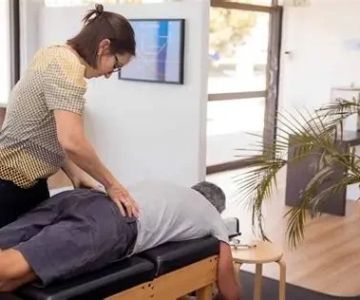
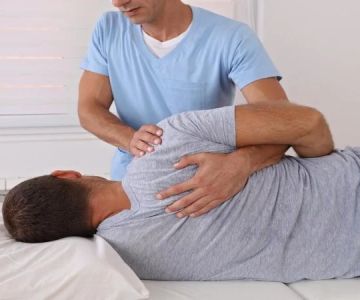

 Tulsa Spine and Wellness5.0 (27 reviews)
 Dan Barbuto, D.C.0.0 (0 reviews)
 Frida Chiropractic and Wellness Center5.0 (16 reviews)
 Oceanside Wellness Center4.0 (124 reviews)
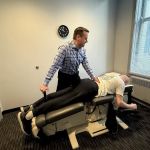 Loop Spine & Sports Center5.0 (99 reviews)
 West Chester Acupuncture and Chiropractic: Dr. Burton T. Young, DC, DiplAc, FIAMA5.0 (6 reviews)
 Chiropractic Advice for Pregnancy and Safe Chiropractic You Can Start Today
 How Chiropractic Adjustments Can Enhance Your Body’s Flexibility
 Chiropractic for Managing Sleep Issues and Insomnia
 Top Questions About Neck Pain Answered by Chiropractors
 Best Chiropractic Treatments for Sciatica Treatment According to Experts | ChiroScope
 How to Sleep After a Chiropractic Adjustment for Best Results and Less Morning Stiffness