

Chiropractic Positioning: Speak Up Before Pain Increases
On this page
- Quick answer
- Why positioning matters
- Plan before getting on the table
- Questions for common positions
- Use clear stop and change cues
- Supports and alternatives
- Recheck after changing position
- Symptoms that need medical triage
- Limitations and important notes
- Sources and evidence notes
- Frequently asked questions
- Conclusion and next steps
Quick answer
Tell the chiropractor before a position increases pain, numbness, dizziness, breathing difficulty, pressure, or anxiety. Ask how to get on and off the table, request pillows or bolsters, and agree on a stop word or hand signal. You can pause, change position, choose another technique, or decline care. Positioning should be adapted to your symptoms, mobility, medical history, and consent.
This guide is for U.S. adults preparing for chiropractic or other manual care. It does not determine whether a treatment is appropriate. New neurologic, traumatic, vascular, or other warning signs need medical triage before routine positioning or manipulation.
Why positioning matters
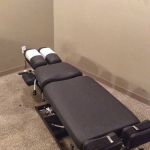
Manual-care visits may use seated, standing, face-up, face-down, or side-lying positions. A treatment table may raise, lower, tilt, or contain moving sections. Each position changes joint angles, breathing space, pressure points, visual orientation, and the effort needed to transfer.
A position that is comfortable for one person may aggravate shoulder pain, hip pain, reflux, vertigo, pregnancy-related discomfort, breathing problems, recent surgery, osteoporosis risk, or neurologic symptoms in another.
Comfort is not the only issue. The clinician needs to know when a position changes symptoms because it may alter the examination, technique, risk assessment, or decision to refer.
Plan before getting on the table
- Describe your limits. Mention difficulty lying flat, turning the head, bearing weight through arms, kneeling, rolling, or standing quickly.
- Update health information. Report pregnancy, surgery, fractures, falls, dizziness, breathing conditions, implanted devices, medication changes, and new symptoms.
- Ask for a demonstration. Have the clinician explain the transfer and final position before you move.
- Check table height. Request adjustment or a stable step with assistance when needed.
- Plan the exit. Know how you will sit up, pause, and stand without rushing.
- Agree on a stop cue. Make sure both you and the clinician will stop immediately when it is used.
Questions for common positions
Face down
Ask how the head and neck will be supported and whether the face cradle fits. Report sinus pressure, breathing restriction, jaw discomfort, shoulder pain, pregnancy, or inability to tolerate neck rotation. A seated or side-lying alternative may be possible.
Face up
Tell the clinician if lying flat worsens back pain, reflux, breathing, dizziness, or leg symptoms. Knee support, head elevation, or another position may help when clinically appropriate.
Side lying
Report shoulder, hip, rib, pregnancy, or balance concerns. Ask where arms and legs should go and whether a pillow between knees or under the head is appropriate. Do not let a limb hang unsupported if it causes symptoms.
Seated or standing
Use stable foot support and tell the clinician about fainting, orthostatic symptoms, or balance difficulty. Have assistance and a chair available for transitions.
Use clear stop and change cues
Use concrete language:
- “This position is increasing numbness in my right hand.”
- “I feel dizzy when the table lowers.”
- “I cannot breathe comfortably face down.”
- “Please pause before moving my neck farther.”
- “I do not consent to this technique; what are the alternatives?”
Do not wait until discomfort becomes severe. The clinician cannot reliably infer symptoms from muscle tension or facial expression. Consent can be withdrawn at any point, even after positioning has begun.
Supports and alternatives
Pillows, wedges, bolsters, towels, face-cradle adjustments, table-height changes, and slower transfers may improve support. They must be stable, clean, placed by someone who understands the planned technique, and not interfere with breathing or circulation.
Alternative care may include a different position, reduced range, lower-force technique, exercise or education, another clinician, or medical evaluation. An adaptation should have a clinical reason and remain within the practitioner’s competence.
Patients using mobility devices, interpreters, service animals, or caregiver assistance should discuss the transfer plan before the visit. The patient should direct personal assistance preferences where possible.
Recheck after changing position
After lying up, sitting, or standing, pause before walking. Report dizziness, visual change, weakness, new numbness, nausea, shortness of breath, or pain. Use the table or clinician’s assistance only as directed; do not grab moving sections.
Before leaving, document what position was difficult and what adaptation worked. Add it to the clinic record so the next visit does not repeat the problem.
If a reaction lasts, worsens, or affects function, contact the clinician and obtain appropriate medical evaluation. Do not return for the same position without reassessment.
Symptoms that need medical triage
Seek urgent care for new weakness, loss of coordination, bowel or bladder control change, saddle numbness, severe or sudden headache, chest pain, fainting, breathing trouble, major trauma, fever with severe spinal pain, or rapidly worsening symptoms.
Sudden facial droop, speech or vision change, severe unusual neck or head pain, marked dizziness, or difficulty walking may be emergency neurologic or vascular signs. Call emergency services rather than continuing manual care.
Limitations and important notes
- Comfort does not prove a technique is medically appropriate; screening and consent still matter.
- Pain during positioning should not be dismissed as necessary for an adjustment.
- Moving treatment tables can create pinch and fall hazards; follow staff instructions.
- Pregnancy, fracture risk, recent surgery, and neurologic symptoms require individualized planning.
- A patient may request a chaperone or support person subject to clinic policy and privacy considerations.
Sources and evidence notes
This article reflects broad patient-safety and manual-care principles: screen for contraindications, adapt positioning, support safe transfers, communicate symptoms, and maintain ongoing consent.
Use licensed clinicians and appropriate medical, rehabilitation, accessibility, or obstetric guidance for individual needs. No position or technique is recommended or guaranteed safe here.
Frequently asked questions
Do I have to lie face down?
No. Explain why you cannot tolerate it and ask about a clinically appropriate seated, side-lying, face-up, or non-manual alternative.
Can I ask for extra pillows?
Yes. The clinician should decide safe placement for the planned examination or technique with your input.
What if I feel dizzy when the table moves?
Say stop immediately, remain supported, and do not stand quickly. Recurrent or severe dizziness needs appropriate medical assessment.
Can I change my mind after getting on the table?
Yes. Consent is ongoing. You can pause, reposition, decline a technique, or end the visit.
Should positioning cause pain so the clinician can find the problem?
Provocative examination may sometimes reproduce a symptom under controlled conditions, but it should be explained and consented to. Significant or escalating symptoms require stopping and reassessment.
Conclusion and next steps
Plan positioning as part of care, not an afterthought. Explain transfer and lying limits, ask for a demonstration, agree on a stop cue, and report symptoms early. Use stable supports or alternatives when appropriate, pause after transitions, and document what worked. You always retain the right to stop or decline.






 QiroFit5.0 (4 reviews)
 Chirolief Solutions5.0 (2 reviews)
 Steven Goodman, DC0.0 (0 reviews)
 Neil Schneider DC4.0 (17 reviews)
 Zero Pain Clinic4.0 (11 reviews)
 Fischer Health & Rehabilitation5.0 (37 reviews)
 Chiropractic Advice for Pregnancy and Chiropractic Practices You Can Start Today
 The Role of Chiropractic Care in Managing Arthritis and Joint Pain
 The Role of Chiropractic Care in Managing Digestive Health Issues
 How Chiropractors Help With Posture Correction and Why It Works
 How Chiropractic Adjustments Can Improve Mobility: Chiropractic vs Physical Therapy
 10 Things You Should Know About Pinched Nerve