
Chiropractic Clinic Hygiene: What Patients Can Observe
On this page
Quick answer
Patients can look for clean treatment surfaces, fresh linens or barriers, hand hygiene at appropriate moments, orderly equipment, safe handling of reusable items, and clear illness and cleaning policies. Appearance alone cannot prove that every infection-control step is correct, so ask how tables, face cushions, tools, and shared exercise equipment are cleaned between patients. Pause the visit if a visible concern is not addressed.
Clinic hygiene includes hand hygiene, surface cleaning, reusable-equipment processing, linen handling, respiratory practices, waste management, and staff procedures. The correct process depends on the item, how it is used, contamination level, product instructions, and current public-health requirements.
What to ask before the visit
Call ahead when you have a weakened immune system, open wound, contagious illness, severe allergy to cleaning products, or another health concern that may affect the setup. Ask whether the clinic can explain its cleaning and accommodation procedures without requesting another patient’s private information.
Useful questions include:
- Are table surfaces and face-contact areas cleaned between patients?
- Are linens single-use before laundering, and where are used items placed?
- How are reusable tools cleaned or disinfected for their intended use?
- What should a patient do if they develop contagious symptoms before the appointment?
- Can fragrance or product sensitivities be accommodated?
What patients can reasonably observe
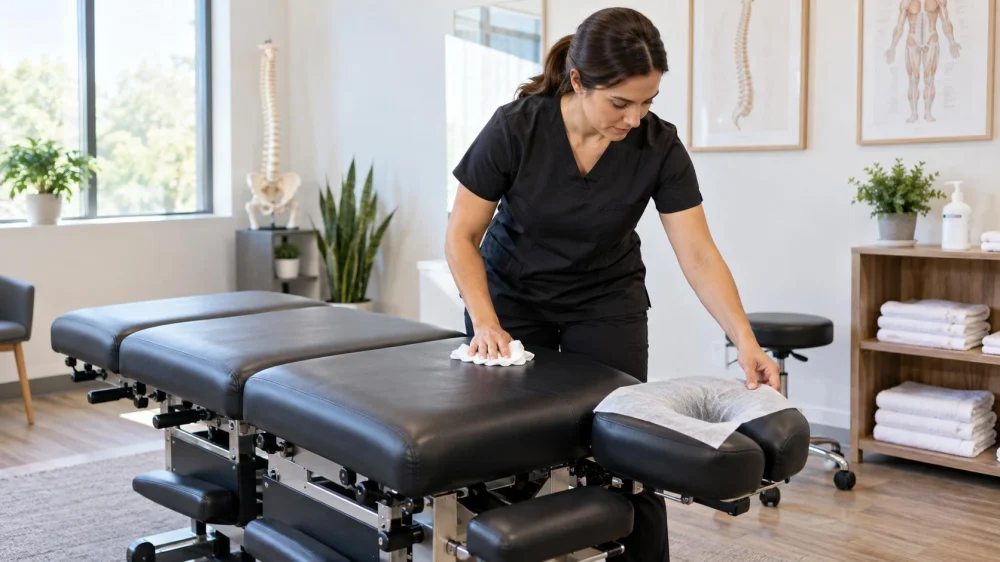
Look for a clear transition between patients: used paper or linens removed, surfaces treated according to the clinic process, and fresh barriers or linens placed. Hand-cleaning supplies should be available to staff, and sinks or sanitizer should not be blocked.
Staff should clean hands at moments appropriate to contact and contamination, but a patient may not see every step. Gloves are not a substitute for hand hygiene and are not required for every form of routine contact. When gloves are used, they should be changed rather than worn across unrelated tasks.
General order matters because clutter can interfere with cleaning, but a tidy room alone is not proof of disinfection. Strong chemical odor also does not prove that a product was used correctly.
Tables, linens, and shared equipment
Face cushions, table controls, handholds, bolsters, exercise bands, weights, and devices can be touched by multiple people. Ask which items are cleaned between users and which have washable or disposable covers. Products need the correct surface compatibility and contact time; a quick visible wipe may not tell the whole story.
Clean linen should be stored away from used linen. Used items should go directly into a designated container rather than onto clean surfaces or the floor. Disposable items should not be reused unless specifically designed and processed for reuse.
Personal items should not be placed on treatment or clean-equipment surfaces when avoidable. Keep your phone and bag together in the designated area.
How to raise a concern
Use a specific, neutral question: “Has this face cushion been cleaned since the previous patient?” or “Could I have a fresh barrier, please?” A professional clinic should be able to explain or correct the setup.
If you see visible soil, used linen, a wet or damaged surface, improperly stored sharp item, or another immediate concern, ask staff to pause before contact. Do not clean clinical equipment yourself with a personal wipe; incompatible chemicals can damage surfaces or create residues.
If the response does not resolve the concern, you may decline that part of the visit or leave. Document facts rather than assumptions and use the clinic manager or appropriate licensing or public-health channel for serious unresolved issues.
Limitations and important notes
Patients cannot audit a full infection-control program from the waiting room. Requirements vary by state, item, service, and current health guidance. A clinic’s written policy and staff training are important even when not visible.
This article provides general hygiene questions, not a legal or infection-control inspection standard. Seek medical advice after a suspected exposure or for signs of infection such as spreading redness, warmth, pus, fever, or worsening pain.
Sources and evidence notes
This guide reflects broad healthcare hygiene principles: clean hands, process shared surfaces and reusable equipment according to risk and instructions, separate clean and used linens, and allow patients to raise concerns. Local regulations and current clinical guidance take priority.
Frequently asked questions
Should a chiropractor wear gloves?
Glove use depends on the task and exposure risk. Gloves do not replace hand hygiene and should be changed between contaminated and clean tasks.
Is table paper enough?
Paper can be a barrier but does not automatically replace cleaning when the underlying surface or exposed areas require it.
Can I bring my own towel?
Ask first. A clinic may have a controlled linen or barrier process, and a personal towel may not substitute for required cleaning.
What if I am sick on appointment day?
Contact the clinic before arrival and follow its current illness policy. Seek medical care appropriate to your symptoms rather than attending manual care when urgent triage is needed.
Does a strong disinfectant smell mean the room is clean?
No. Correct product, coverage, contact time, and surface preparation matter. Odor is not a reliable quality measure.
Conclusion and next steps
Before treatment, notice whether the clinic resets surfaces and linens, handles shared items consistently, and answers hygiene questions clearly. Ask about any visible concern before contact. A clean-looking room is helpful, but transparent procedures and an appropriate response to questions provide stronger reassurance.




 Dongell Chiropractic4.0 (78 reviews)
 Bair Chiropractic Center5.0 (10 reviews)
 Watts Chiropractic4.0 (143 reviews)
 Colorado Springs Whiplash Doctor0.0 (0 reviews)
 Comprehensive Chiropractic & Osteopathy5.0 (234 reviews)
 Hampton Chiropractic Center5.0 (3 reviews)
 New Numbness or Weakness? Get Triage Before Chiropractic Care
 Can Chiropractic Care Solve Your Chiropractic Insurance Coverage Problem?
 What Causes Chiropractic for Seniors and How Chiropractors Treat It
 The Truth About Chiropractic FAQ and What Chiropractors Recommend
 How Chiropractors Help with Vertigo and Balance Disorders: Solutions for Better Health
 Chiropractic Care for Managing Stress and Anxiety