Questions & Checklists
Build Your Care-Choice Brief
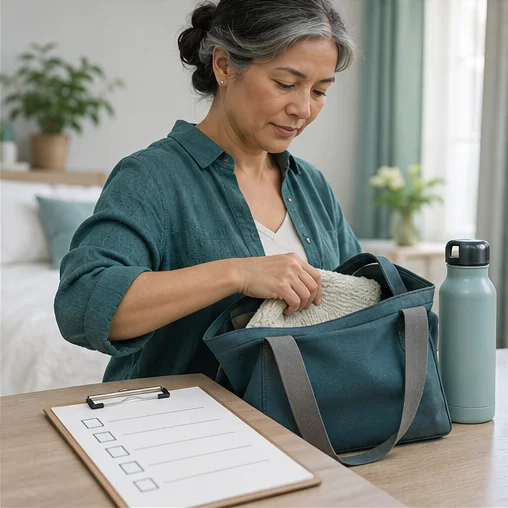
Create a private summary of goals, context, practical constraints, and questions without generating a diagnosis.

What a brief is for
A care-choice brief is a short personal preparation note. It helps you explain what matters, compare practical constraints and remember questions when speaking with a health professional. It is not a diagnosis, recommendation or proof that a clinic offers a service. Once you have candidates, the clinic comparison checklist can help you record confirmed facts and unknowns.
Write your priorities
- Goal: Which daily activity or function would you like to discuss?
- Context: What timing, changes, previous care and relevant history should you share privately with a clinician?
- Practical constraints: What location, travel, schedule, language, accessibility or budget requirements matter?
- Questions: What do you need to know about assessment, alternatives, risks, costs and reassessment?
Include only information you need for your own decision. This guide does not automatically save or transmit your brief; use your own secure notes or the category question checklist.
Separate facts from unknowns
For each clinic, distinguish information confirmed by an official source or direct conversation from an unanswered question. Record when it was confirmed. For insurance, ask both the clinic and your own insurer. A plan name, clinic category or general guide is not proof of coverage or suitability.
A simple note you can use
In a private notebook, create four lines: “My goal,” “Practical needs,” “Questions for the clinician,” and “Still to confirm.” Under the last line, note the source and date of each answer. For example, a convenient appointment time confirmed by the clinic and an unconfirmed insurance benefit are separate facts. Share only the information needed for the conversation and keep the note in a place you control.
Carry the questions forward
Use your brief during a call or appointment. Ask the clinician to explain findings, alternatives, proposed goals and follow-up. Do not place symptoms, insurance identifiers or a precise private address in a public share link. If urgent symptoms are present, seek appropriate medical help rather than waiting to complete the brief.
Sources and scope
Topic references address specific subjects in this guide. General references provide background and do not necessarily support every statement. Access dates show when a source was consulted, not when this guide received professional review. No source establishes that a named clinic offers a service or is suitable for an individual. Source links open in a new tab.
- National Center for Complementary and Integrative Health — Selecting a Complementary Health PractitionerTopic reference · Practitioner credentials, coordination and insurance questions · Accessed 2026-11-16
- Agency for Healthcare Research and Quality — Shared DecisionmakingTopic reference · Discussing options, risks and patient preferences · Accessed 2026-11-16
- National Center for Complementary and Integrative Health — Chiropractic: In DepthGeneral background · General chiropractic overview, evidence and safety context · Accessed 2026-11-15
More in Questions & Checklists