
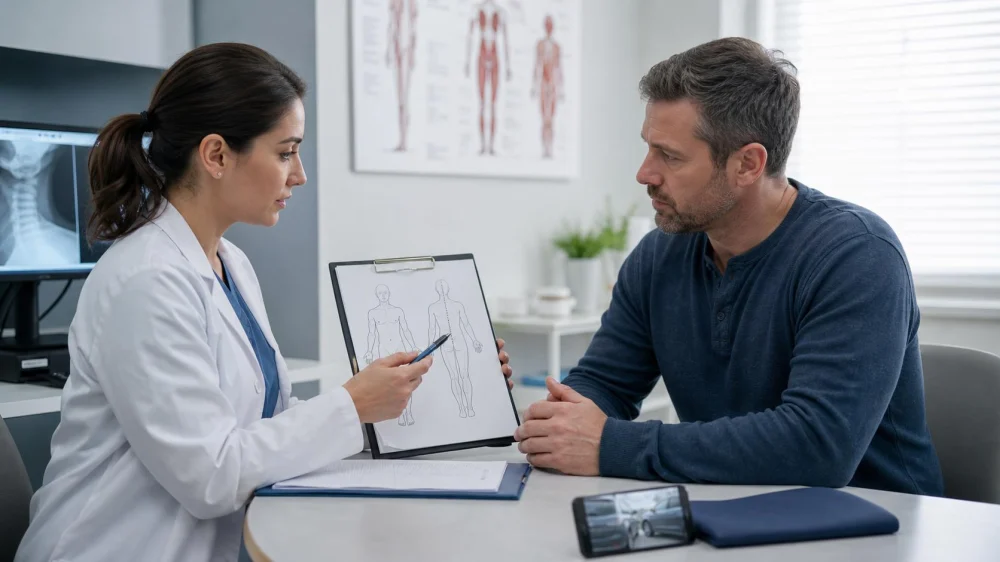
After a Car Crash: Get Medical Triage Before Manual Care
On this page
Quick answer
After a car crash, medical triage comes before chiropractic manipulation, massage, exercise, or other manual care. Call 911 for emergency signs. Otherwise, contact a qualified medical clinician promptly, describe the crash and all symptoms, and follow activity and imaging advice. Consider manual care only after serious injury is assessed and providers can coordinate a safe plan.
This guide is for adults in the United States after a motor-vehicle collision. It does not diagnose whiplash, concussion, fracture, spinal injury, internal injury, or vascular injury.
Screen for emergency warning signs
Call 911 or go to an emergency department after a crash when there is:
- Loss of consciousness, inability to stay awake, seizure, or increasing confusion.
- Worsening headache, repeated vomiting, slurred speech, or unusual behavior.
- New weakness, numbness, decreased coordination, or inability to move a limb.
- Severe neck or back pain after trauma, especially with neurologic symptoms.
- Trouble breathing, chest pain, severe abdominal pain, or significant bleeding.
- One pupil larger than the other, double vision, or sudden vision change.
- Loss of bladder or bowel control, numbness around the groin or seat area, or rapidly worsening leg symptoms.
- Suspected fracture, major deformity, or inability to stand or walk safely.
Do not drive yourself with severe pain, confusion, vision problems, weakness, dizziness, or reduced alertness. Avoid unnecessary neck or spine movement when serious injury is possible and follow emergency-dispatcher instructions.
Document symptoms and crash details
Some concussion and soft-tissue symptoms can appear or become noticeable hours or days after a crash. A concise timeline helps clinicians identify change.
Record:
- Date, time, seat position, seat belt use, airbag deployment, and direction of impact.
- Head strike, loss of consciousness, memory gap, confusion, or immediate dizziness.
- Neck, back, chest, abdominal, limb, or jaw symptoms and when each began.
- Headache, nausea, light or noise sensitivity, balance, vision, concentration, memory, mood, and sleep changes.
- Numbness, tingling, weakness, clumsiness, or changes in walking.
- Medicines, blood thinners, pregnancy, prior concussion, spine surgery, osteoporosis, cancer, and other relevant history.
Photograph visible bruising and vehicle damage when safe, but do not delay care for documentation. Insurance and legal reports are separate from the clinical need to assess injury.
Use medical evaluation to guide next care
A medical clinician can review the injury mechanism, symptoms, neurologic status, medications, and examination findings. Imaging is not automatic for every crash, but it may be needed when signs, symptoms, history, or clinical decision rules raise concern.
Ask for written instructions covering:
- The working diagnosis and what remains uncertain.
- Which symptoms require emergency reevaluation.
- Safe use of pain medicine and medicines to avoid.
- Return to driving, work, exercise, lifting, and screen use.
- Whether physical therapy, chiropractic care, massage, or another service is appropriate and when.
- Who coordinates follow-up and receives reports from other providers.
A normal initial test does not mean every symptom is imaginary or that no follow-up is needed. Conversely, pain alone does not confirm that spinal manipulation is appropriate. Match treatment to the evaluated condition and evolving symptoms.
Questions before chiropractic or manual care
If medical triage does not identify a contraindication and you are considering chiropractic or other manual care, ask:
- Have you reviewed the crash history, medical examination, imaging reports, medicines, and current symptoms?
- What diagnosis or functional problem are you treating?
- What is the expected benefit, and how will improvement be measured?
- What techniques are proposed, and what lower-force or non-manipulative alternatives exist?
- What risks matter for my head, neck, spine, blood vessels, bones, and medications?
- Which symptoms mean treatment stops and medical care resumes?
- How many visits are planned before formal reassessment?
- Will you communicate findings and progress to my medical clinician?
Decline or pause any technique you do not understand or consent to. New or worsening neurologic, severe headache, balance, vision, speech, or other concerning symptoms require medical reassessment, not treatment continuation.
Post-crash care checklist
- Emergency danger signs checked now and over the next several days.
- Safe transportation arranged.
- Crash and symptom timeline recorded.
- Complete medical history and medicines shared.
- Qualified medical evaluation completed.
- Written return-to-activity and warning-sign instructions obtained.
- Records and imaging reports shared with each provider.
- Manual-care benefits, risks, alternatives, and stop rules discussed.
- One clinician identified to coordinate the plan.
- Progress measured by function as well as pain.
Best for uncomplicated recovery: coordinated, stepwise care with clear reassessment. Not ideal: moving directly from the crash scene to high-force manual treatment without medical triage or informed consent.
Limitations and important notes
This article does not determine whether chiropractic care is indicated, effective, or safe for an individual injury. The decision depends on diagnosis, technique, clinician qualifications, medical history, patient preference, and alternatives.
Current CDC guidance notes that concussion symptoms may emerge later and lists danger signs such as worsening headache, repeated vomiting, weakness, numbness, slurred speech, seizures, increasing confusion, and inability to wake. Use emergency care for those signs.
Do not let insurance authorization, a claim deadline, or pressure from another party determine the clinical sequence. Address immediate health and safety first, then preserve records and obtain appropriate legal or insurance advice separately.
Frequently asked questions
Do I need imaging before chiropractic care after every crash?
No. Imaging should follow clinical assessment and evidence-based criteria. The important first step is qualified medical triage, not automatic imaging or automatic manipulation.
What if I felt fine at the crash scene?
Some symptoms can appear later. Monitor for changes, seek prompt clinical advice, and use emergency care for danger signs.
Can chiropractic care diagnose a concussion?
A possible concussion requires appropriate medical evaluation and return-to-activity guidance. Do not use spinal treatment as a substitute for brain-injury assessment.
Should I rest completely until pain is gone?
Follow individualized medical instructions. Prolonged complete inactivity is not automatically appropriate, while premature driving, exercise, or lifting may also be unsafe.
What if symptoms worsen after manual care?
Stop treatment and contact a medical clinician. Use emergency care for severe headache, weakness, numbness, speech or vision change, loss of coordination, fainting, or another danger sign.
Sources and evidence notes
The delayed-symptom warning and concussion danger signs in this guide follow current CDC guidance. The emergency neck and spine injury triggers reflect MedlinePlus emergency information. The sequencing recommendation is a safety inference: traumatic injury should be triaged before elective manual treatment.
Conclusion and next steps
Check for emergency signs, arrange safe transportation, and contact a qualified medical clinician after a crash. Record the impact and symptom timeline, obtain written warning and activity guidance, and share records. Consider chiropractic or other manual care only after triage, with informed consent, alternatives, stop rules, and coordination.





 Souder Chiropractic5.0 (25 reviews)
 The Health Spot Chiropractic & Wellness Center5.0 (22 reviews)
 Woodbourne Chiropractic Center5.0 (21 reviews)
 Chiropractic Care of Bedminster4.0 (20 reviews)
 Marsteller Family Chiropractic4.0 (420 reviews)
 HealthSource Chiropractic of Lewisville5.0 (51 reviews)
 The Role of Chiropractic Care in Treating Soft Tissue Injuries
 What is the Difference Between a Chiropractor and a Physical Therapist for Herniated Discs
 A Parent’s Story: Asthma Symptoms Improved After Chiropractic Care
 Chiropractic Care for Older Adults: A Safety Question List
 Expert Tips for Managing TMJ and Chiropractic Naturally with Chiropractic Care
 Chiropractic Care for Managing Shoulder Pain and Injuries