
Techniques & Terms
Soft-Tissue Work: What to Confirm
Separate a general technique label from proof that a clinic offers it.
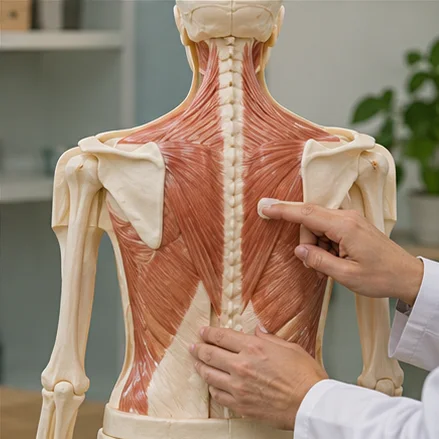
What does the label tell you?
“Soft-tissue work” is a broad phrase rather than a single standardized service. A clinician may use different methods and pressure, and what is offered varies. Ask which tissues or areas are involved, what the practitioner plans to do and why it is being considered.
If massage is proposed
Massage is one approach that may be described as soft-tissue work; the terms are not interchangeable. NCCIH reports that harmful effects from massage appear uncommon but serious effects have been reported, including injury in some circumstances. Ask how the proposed technique, pressure and your health history affect the discussion. This evidence does not automatically apply to other techniques.
What is known about massage for pain?
NCCIH describes the evidence for massage in low-back pain as weak; studies have reported short-term improvements, but their quality limits confidence in the findings. For neck or shoulder pain, NCCIH notes that any benefit may be short-lived. These findings concern massage in particular and do not establish the effect of every technique called soft-tissue work, or predict your response.
Share relevant conditions, medications, prior injuries and operations before the clinician proposes pressure or positioning. Ask what would make the specific technique unsuitable or require modification, and how to report an unwanted response. Do not use massage to delay needed medical assessment.
Connect it to your goal
Describe the activity or function you want to discuss and relevant history. Ask how the suggested approach relates to the assessment, what evidence applies to your concern and how progress will be reviewed. A label does not establish an expected outcome.
Questions before agreeing
- Who will provide the service and what training do they have?
- What will happen, what might I feel, and how can I ask to pause?
- What risks, limitations and alternatives are relevant to my history?
- What will it cost and does my insurer cover the specific service?
Verify the listing
A chiropractor listing does not prove the clinic offers soft-tissue work or that the approach is suitable for you. Confirm current services, availability and coverage directly. Seek appropriate medical advice for urgent or changing symptoms.
Sources and scope
Topic references address specific subjects in this guide. General references provide background and do not necessarily support every statement. Access dates show when a source was consulted, not when this guide received professional review. No source establishes that a named clinic offers a service or is suitable for an individual. Source links open in a new tab.
- National Center for Complementary and Integrative Health — Massage Therapy: What You Need To KnowTopic reference · Massage-specific evidence and safety · Accessed 2026-11-16
- National Center for Complementary and Integrative Health — Chiropractic: In DepthGeneral background · General chiropractic overview, evidence and safety context · Accessed 2026-11-15
More in Techniques & Terms