
Joint Hypermobility and Chiropractic Care: Coordinate First
On this page
Quick answer
If joints move beyond typical ranges or feel unstable, tell the chiropractor about dislocations, subluxations, falls, bruising, pain, neurological symptoms, diagnoses, medications, and other clinicians involved. Ask how examination and treatment will avoid end-range stress and support stability. Hypermobility varies widely, and new neurological, vascular, severe pain, or injury symptoms need medical assessment before manual treatment.
Why it matters
Joint hypermobility means one or more joints move beyond the range expected for many people. It can be asymptomatic, localized, or part of a broader condition. Flexibility alone does not establish a syndrome or explain every pain complaint.
This U.S. guide supports shared planning with licensed clinicians. It does not diagnose a connective-tissue disorder or recommend manipulation. Scope, training, technique, and referral options vary among chiropractors and other professionals.
Practical checklist
- Share formal diagnoses, genetic or rheumatology evaluations, prior dislocations, fractures, surgeries, and imaging.
- Describe joints that give way, lock, swell, bruise, or become painful after small movements.
- List dizziness, fainting, headaches, numbness, weakness, bowel or bladder changes, and other systemic symptoms.
- Provide medications, bleeding history, skin fragility, wound-healing issues, and pregnancy information.
- Ask how the clinician assesses control, strength, balance, function, and irritability—not range alone.
- Request alternatives to end-range or high-force techniques and confirm consent before each method.
- Coordinate goals and restrictions with physical therapy, medical, pain, or specialty care when involved.
Step-by-step plan
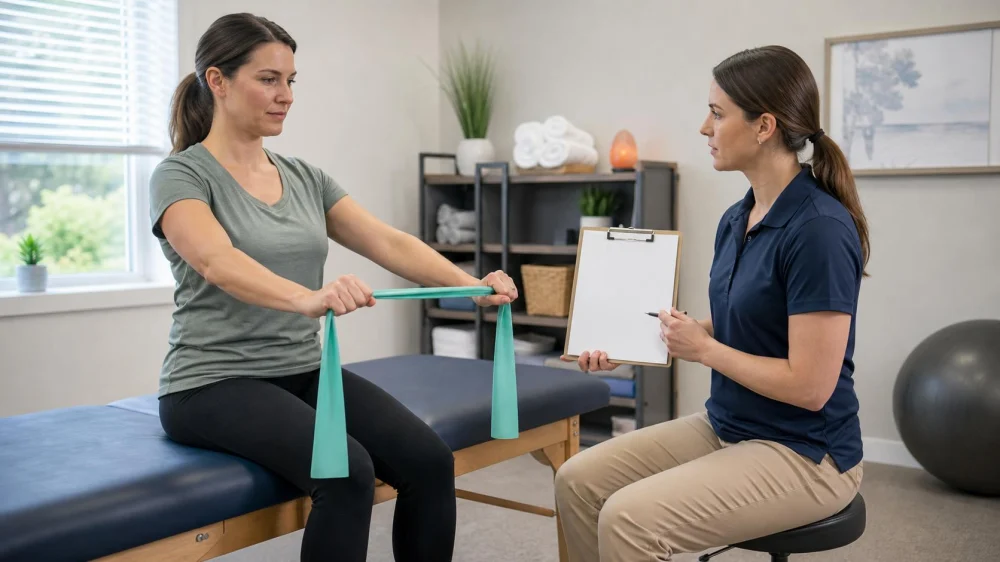
- Clarify the purpose of care. Define a functional goal such as tolerating work, walking, sleep, or exercise rather than trying to increase already excessive range.
- Review safety history. Frequent dislocation, significant trauma, unexplained neurological symptoms, vascular concerns, or suspected systemic disease may require referral first.
- Ask for a baseline. Useful measures may include symptom irritability, balance, strength, task tolerance, and recovery, selected for the individual.
- Discuss technique boundaries. State positions, forces, or joint ranges that feel unstable and ask what lower-force, non-thrust, exercise, or referral options exist.
- Favor controlled progression. Stability, proprioception, pacing, and task-specific strength may be more relevant than stretching farther, but the exercise plan must be individualized.
- Monitor delayed response. Track symptoms during care and over the following day rather than judging only the immediate sensation.
- Reassess value. Continue only when function, safety, consent, and measurable goals support the plan; coordinate or seek another opinion when progress is absent or symptoms worsen.
Keep a brief joint history, previous injuries, usual symptom range, agreed technique limits, functional goal, home plan, and response. Note delayed instability or neurological changes promptly.
Limits and warning signs
A flexibility score cannot diagnose the cause of pain or predict whether manipulation is appropriate. Temporary relief does not prove structural correction. Exercise and manual care can also flare symptoms when dose, range, or diagnosis is wrong.
Seek urgent medical care for a new severe headache or neck pain, fainting with neurological symptoms, stroke-like signs, rapidly progressive weakness, new bowel or bladder dysfunction, major trauma, suspected fracture, or a joint that is dislocated with impaired circulation or sensation.
Frequently asked questions
Does being flexible mean I have a disorder?
No. Hypermobility can occur without symptoms. Diagnosis of a syndrome requires broader clinical criteria and qualified evaluation.
Should hypermobile joints be stretched more?
Not automatically. More range may worsen instability. Ask about controlled strength and function based on your assessment.
Can I request no high-force manipulation?
Yes. Consent and technique preferences should be discussed before care, and you can decline or stop a method.
Which clinician should coordinate care?
It depends on symptoms and diagnosis. Primary care, physical therapy, rheumatology, genetics, pain, or other specialties may be involved alongside or instead of chiropractic care.
Sources and evidence
The guide reflects shared-decision, consent, joint-stability, and interdisciplinary-care principles: assess the whole history, avoid assuming more range is better, modify force and position, track function, and refer for red flags.
Conclusion and next steps
Write the joints and tasks that feel unstable, the movements you want to avoid, and one functional goal. Share this before treatment begins and ask how the plan supports control rather than extra range. Stop and seek medical triage when new serious symptoms appear.






 ChiroWay of North Richland Hills5.0 (15 reviews)
 Seeman Family Chiropractic5.0 (38 reviews)
 Back To Health Chiropractic: Dr. Drew Czerminski4.0 (138 reviews)
 Ideal Health Chiropractic5.0 (131 reviews)
 Keller Spine And Auto Injury4.0 (27 reviews)
 Our Well House4.0 (122 reviews)
 What Causes Spinal Alignment Issues and How Chiropractors Treat It
 How to Relieve Pregnancy and Chiropractic Without Medication – Chiropractor Approved
 The Role of Chiropractic in Reducing Stress and Preventing Injury
 Typical Cost of Chiropractic Family Plans That Cover Everyone
 How to Relieve Chiropractor Benefits Without Medication – Chiropractor Approved
 Chiropractic & Wellness: Achieving Better Health Through Chiropractic Care