
Concerns & Goals
Mobility Limits: Preparing for an Evaluation
Describe movements and daily tasks that are difficult and identify access needs for a visit.
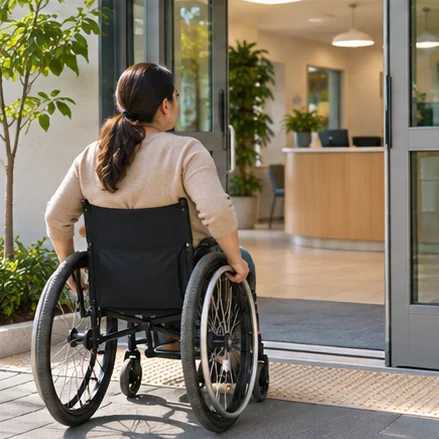
Describe the activity and change
Choose a task that is difficult, such as reaching, walking, climbing a step or getting out of a chair. Note when the change began, whether it followed an injury, what assistance you use and how it affects daily life. Do not assume the reason from an online description.
Explain what happens during the task
For example, describe whether getting out of a chair requires a handrail or another person's assistance, when that changed and whether the difficulty varies. Mention any changes in strength, sensation or balance to the clinician. This description helps frame an assessment; it does not identify the cause or establish which treatment is safe.
Discuss appropriate evaluation
Share relevant conditions, medicines, falls, prior operations and changes in strength or sensation with a qualified professional. Ask which assessment is appropriate and whether another professional should be involved. Sudden loss of movement, serious injury or rapidly changing symptoms may need emergency help; seek appropriate medical advice promptly.
Prepare for access and the visit
- Can I enter the building and use the examination room with my mobility device?
- What support, communication or transport arrangements are available?
- How will the clinician assess the activity that matters to me?
- What options, alternatives and referral boundaries should be discussed?
- What are the expected costs and follow-up arrangements?
Make the access question specific
Tell the clinic what you need to use the visit, such as a step-free route, space for a mobility device, help transferring to an examination table, or accessible communication. Ask which entrance to use and whether the examination space and restroom can accommodate your needs. If assistance is required, ask who provides it and whether it must be arranged in advance. Avoid assuming that a listing or generic accessibility label confirms these details.
Record the answer, the person who gave it and the date, then confirm again if the appointment or your needs change. The language and accessibility guide has additional questions, and the transport guide can help you plan the journey.
Set a goal and review it
Ask how a functional goal can be observed and when the plan should be reviewed. Confirm accessibility and services with the clinic; a directory listing does not prove either.
Sources and scope
Topic references address specific subjects in this guide. General references provide background and do not necessarily support every statement. Access dates show when a source was consulted, not when this guide received professional review. No source establishes that a named clinic offers a service or is suitable for an individual. Source links open in a new tab.
- U.S. Department of Justice — Communicating Effectively with People with DisabilitiesTopic reference · Effective communication and aids in covered contexts · Accessed 2026-11-16
- National Center for Complementary and Integrative Health — Chiropractic: In DepthGeneral background · General chiropractic overview, evidence and safety context · Accessed 2026-11-15
- National Library of Medicine / MedlinePlus — When to use the emergency room - adultGeneral background · General emergency warning context · Accessed 2026-11-15
More in Concerns & Goals