
- 1. Understanding Desk Job Posture Problems
- 2. How Posture Problems Affect Your Health
- 3. Common Posture Issues at Desk Jobs
- 4. Chiropractic Solutions for Desk Job Posture
- 5. Tips for Improving Your Posture at Work
- 6. When to Seek Chiropractic Care
1. Understanding Desk Job Posture Problems
In today’s world, many people spend a large portion of their day sitting at desks, working on computers or engaged in other office tasks. While this sedentary lifestyle is often unavoidable, it can lead to significant posture problems that, over time, affect the body’s musculoskeletal health. Prolonged poor posture can result in pain, discomfort, and long-term issues with the spine and joints.
Desk job posture problems typically arise from sitting for long periods without proper support or alignment. These issues can affect the spine, neck, shoulders, and hips, leading to discomfort and even chronic pain. Chiropractors often address these problems by offering targeted treatments and advice to help individuals improve their posture and prevent injury.
2. How Posture Problems Affect Your Health
Maintaining poor posture for extended periods can have several negative effects on your health, especially for those with desk jobs. The main issues include:
- Neck and Back Pain: Sitting hunched over or slouching can cause strain on the spine and lead to chronic neck and back pain.
- Headaches: Poor posture, particularly in the neck and upper back, can cause tension headaches due to muscle tightness and nerve irritation.
- Joint Issues: Prolonged sitting can lead to misalignments in the spine and joints, potentially causing discomfort and mobility issues.
- Poor Circulation: Sitting for long periods without moving can impair blood flow, leading to leg stiffness, swelling, or even blood clots.
These are just a few of the health problems associated with poor posture at desk jobs. Fortunately, chiropractic care can help manage and prevent these issues by addressing the root causes of posture problems.
3. Common Posture Issues at Desk Jobs
At desk jobs, several common posture problems can lead to discomfort or pain:
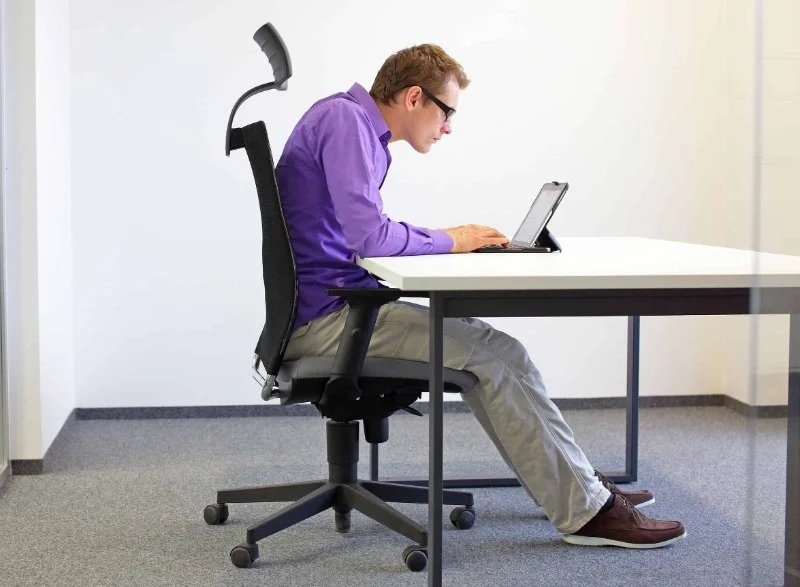
- Forward Head Posture: This occurs when the head is positioned too far forward of the shoulders, often caused by looking down at a computer screen or phone.
- Slouching: Sitting with rounded shoulders and a curved spine can place pressure on the back and neck, causing muscle strain and discomfort.
- Crossed Legs: Crossing your legs while sitting can affect your spinal alignment and lead to issues with your hips and lower back.
- Hunched Shoulders: Poor ergonomics, like having a chair or desk that is too low, can cause the shoulders to hunch forward, leading to muscle strain in the upper back and neck.
Being aware of these common issues is the first step in preventing posture-related problems. Chiropractors often provide advice on how to adjust your workspace to promote better posture and reduce strain on the body.
4. Chiropractic Solutions for Desk Job Posture
Chiropractors play a significant role in helping individuals address posture issues caused by desk jobs. They provide a variety of solutions designed to improve spinal health, reduce pain, and prevent future problems. Some of the most effective chiropractic solutions for desk job posture problems include:
- Spinal Adjustments: Chiropractors can perform spinal adjustments to restore proper alignment, reduce tension in the muscles, and improve overall posture.
- Postural Training: Chiropractors can offer personalized advice and exercises to improve posture and teach individuals how to maintain proper alignment throughout the day.
- Ergonomic Advice: Chiropractors can assess your workspace and provide tips on how to adjust your desk, chair, and computer setup to support better posture.
- Stretching and Strengthening Exercises: Chiropractors may recommend exercises to improve flexibility and strength, particularly in the back, shoulders, and neck.
5. Tips for Improving Your Posture at Work
In addition to chiropractic care, there are several steps you can take on your own to improve your posture while working at a desk:
- Set Up an Ergonomic Workspace: Ensure your desk, chair, and computer are set up to promote proper posture. Your screen should be at eye level, and your chair should support your lower back.
- Take Frequent Breaks: Stand up, stretch, or walk around every 30 minutes to reduce the risk of stiffness and improve circulation.
- Focus on Sitting Properly: Sit all the way back in your chair with your feet flat on the floor, knees at a 90-degree angle, and shoulders relaxed.
- Strengthen Your Core: Regular exercises to strengthen your core can help support your spine and improve posture.
By incorporating these tips into your daily routine, you can alleviate tension, improve your posture, and reduce the risk of developing chronic pain.
6. When to Seek Chiropractic Care
If you experience persistent pain or discomfort despite making adjustments to your posture, it may be time to seek chiropractic care. Some signs that you should visit a chiropractor include:
- Chronic neck, back, or shoulder pain that doesn’t improve with rest.
- Headaches or tension headaches caused by poor posture.
- Stiffness or pain that limits your range of motion or affects your ability to perform daily tasks.
- Postural imbalances that continue to cause discomfort despite corrective efforts.
Chiropractors can provide personalized care to address these issues and help restore proper alignment and function to your body.
For more information on how chiropractic care can help with posture problems and to learn about effective solutions, visit ChiroScope for expert advice and treatment options.






 Clearly Chiropractic4.0 (29 reviews)
 Denver CO Chiropractor5.0 (4 reviews)
 The Chiropractic Source4.0 (324 reviews)
 Hartland Family Chiropractic5.0 (70 reviews)
 Cary P. Dan, DC5.0 (2 reviews)
 Empower Healing0.0 (0 reviews)
 Everything You Need to Know About Chiropractic Wellness Routine from a Chiropractic Perspective
 How Climate Affects Your Roofing Choices
 Chiropractic for Joint Pain Relief: Exploring Non-Surgical Treatment Options
 10 Things You Should Know About Neck Pain: Causes, Care and Prevention
 Chiropractic for Neurological Conditions: How It Can Help the Nervous System
 Chiropractic for Headache Relief: Natural Approaches to Treating Migraines